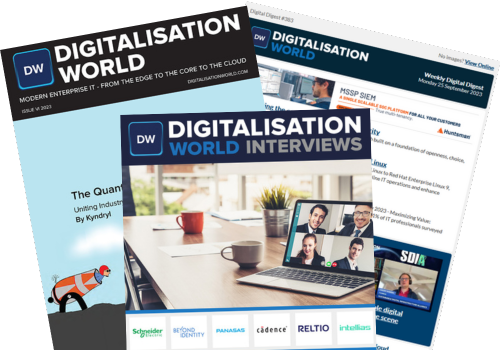
Digital Newsletter
Each week our editor Phil Alsop rounds up the most popular articles, videos and expert opinions. We compile this into a Digital Newsletter and send it straight to your inbox every week.
Digital Magazines
We'll let you know each time a new edition of Digitalisation World is released so that you're always kept up-to-date with the latest and greatest news and press releases.
Video Magazines
The Digitalisation World Video magazine contains the latest Zoom interviews with experts in the industry.
For years, IT departments have operated on a "Just-in-Time" philosophy. Need ten brand new enterprise-grade servers or a hundred laptops? Order them, and they arrive in under a fortnight.
In 2026, that model is no longer viable. A global shortage and tightening supply of server-grade DRAM and High-Bandwidth Memory (HBM), driven by unprecedented AI infrastructure demands, has created a volatile market. For IT departments and procurement teams, this isn't just a supply chain headache; it is a budget and operational risk.
Critical market shifts
Enterprise IT leaders must account for two primary factors currently impacting the channel:
Price Volatility: DRAM prices have seen double-digit increases quarter-over-quarter. Quotes that used to be valid for 30 days are now often only honoured for 7 days or less.
Extended Lead Times: Production priority is being shifted toward high-margin AI components. This has pushed lead times for standard enterprise memory modules from weeks to months.
The view from the channel: Cameo Services
As a dedicated channel services provider, Cameo Services plays a role in helping partners bridge the gap between hardware demand and global supply constraints.
Danny Kirby, Senior Account Director at Cameo Services, comments: "The current market is forcing a change in how the channel approaches the traditional refresh cycle. Rather than viewing hardware as a disposable commodity, there’s a growing trend toward augmenting new purchases with extended maintenance on existing estates. This hybrid approach acts as a buffer against supply chain volatility. It’s no longer about just replacing kit; it’s about ensuring that if lead times for new memory modules slip, the client’s current infrastructure remains stable and performant. Maintenance has essentially become a strategic tool for business continuity in a supply-constrained environment."
Strategies to weather the storm
To keep your operations running smoothly, IT leaders need to move from a reactive to a proactive stance:
1. "Sweat" Your Assets: If you can’t access new kit, make the current kit last. This means shifting focus from replacement to resilience.
2. Extended Planning Cycles: Forecast your hardware needs further in advance, ideally 12 to 18 months ahead where possible.
3. Embrace Maintenance Services: In a supply-constrained market, maintenance becomes the primary tool for business continuity.
4. Leverage Refurbishment: With new hardware and critical components becoming scarcer, trusted refurbished IT suppliers ease procurement pressure.
The impact on the end user: RTK Group
As businesses look for ways to stay flexible, companies like RTK Group are expanding their service offerings to include specialised maintenance and refurbished alternatives that aim to remove the administrative burden from the end user.
Iain Burton, Strategic Account Director at RTK Group, explains:
"Agility is everything, which is why we’ve placed such a heavy focus on our maintenance and hardware lifecycle offerings. Our goal is to give end users greater choice, right down to the line item. Instead of a blanket refresh, we help clients identify exactly which assets to upgrade, which to replace with a performant refurbished alternative and which to move onto a maintenance contract. While this level of detail sounds like an admin burden, we strategically manage that entire process for them. It empowers businesses to be far more surgical with their budgets and navigate supply shortages without slowing down their digital transformation goals."
How maintenance bridges the procurement gap
When the "buy new" option is restricted by global supply chains, a robust maintenance strategy becomes an operational necessity. By focusing on specialised support, IT departments can achieve:
The current memory shortage is not a temporary glitch but a structural shift in the market. By prioritising long-term asset management and professional maintenance, your organisation can bypass supply chain bottlenecks and ensure that hardware remains an asset rather than a liability.