Digital Newsletter
Each week our editor Phil Alsop rounds up the most popular articles, videos and expert opinions. We compile this into a Digital Newsletter and send it straight to your inbox every week.
Digital Magazines
We'll let you know each time a new edition of Digitalisation World is released so that you're always kept up-to-date with the latest and greatest news and press releases.
Video Magazines
The Digitalisation World Video magazine contains the latest Zoom interviews with experts in the industry.
The data centre and multi-cloud services provider, working with digital sustainability consultancy Posetiv, analysed the ‘carbon intensity’ of Europe’s top five data centre markets: London, Frankfurt, Amsterdam, Paris, and Dublin1.
Carbon intensity is a measure of the amount of CO2 generated per kilowatt-hour of electricity used. Countries with more renewable sources in their energy mix tend to score low, while those relying on fossil fuels have a higher associated carbon intensity.
DataVita found that the electricity usage of the five cities’ data infrastructure amounted to a combined annual 6.3 million tonnes of CO2 – equivalent to the carbon footprint of powering 1.2 million average UK households2.
Transitioning all five cities' collective data centre footprint to Scotland could cut total emissions by more than 80%. Frankfurt had the highest annual carbon footprint associated with data centre infrastructure, at 2.4 million tonnes of CO2 – relocating its capacity to Scotland could reduce emissions by 91%.
Southern Scotland – including the country’s central belt between Edinburgh and Glasgow – had an average carbon intensity of 54.97 grams during 2022, according to National Grid data. This is around one-quarter of London’s 200.46 grams and nearly nine times lower than Frankfurt’s 473.62 grams.
Scotland is emerging as a data centre hub, with new facilities such as the country’s first ‘metro’ data centre in Glasgow opening this year at 177 Bothwell Street, a newly developed office building in the city centre.
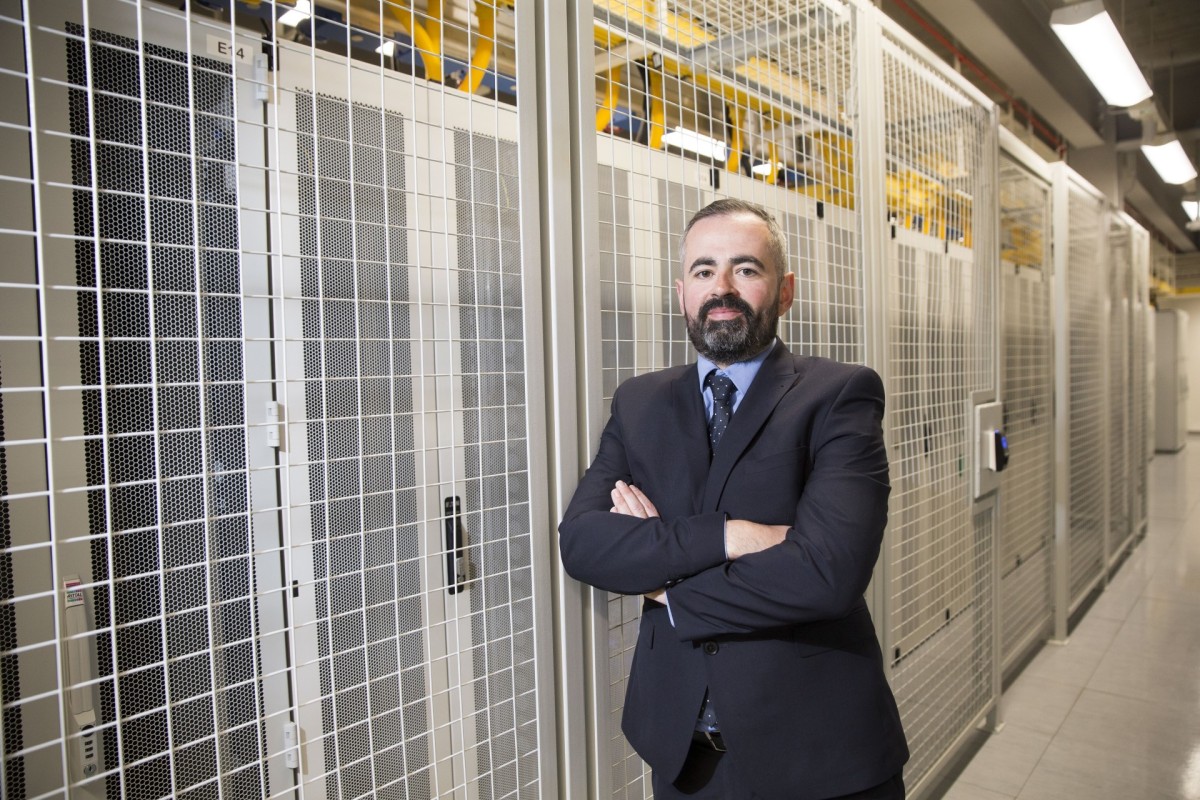
Danny Quinn, MD of DataVita, said: “If organisations are serious about reducing the environmental impact of their IT services, they need to take a close look at where the critical infrastructure they use is located. Looking to a market like Scotland – where renewable sources account for a much larger portion of the energy mix – could cut related emissions by 84-91%.
“Data centres have made great strides optimising power usage effectiveness, water usage, waste heat recycling, and other efficiency measures, but sheer processing demand growth continues to outpace these improvements. The challenge will only increase as organisations increasingly rely on IT services and net zero targets draw nearer.
“There is no advantage in terms of latency and performance by using a data centre in these markets for the majority of IT workloads – particularly when it comes to London and Dublin. Any Scotland-based companies looking at large-scale cloud adoption should reflect on these metrics and consider whether potentially quadrupling their emissions, by choosing a provider in a one of the main markets, is a sensible strategy when delivering your services.”
Mark Butcher, MD of Posetiv, added: “Scotland's energy system offers prime sustainability for these data-intensive cities. In fact, transitioning all five cities' collective data centre footprint to Scotland could cut total emissions by over 80% – placing sustainability firmly alongside surging digital demand.
“Renewable-rich locations offer a way to fundamentally pair commercial growth with absolute emissions reductions – an essential combination in the climate era. While no single solution will address the industry’s emissions alone, strategically building out lower-carbon hubs in locations like Scotland is an important piece of the net-zero puzzle.”