Digital Newsletter
Each week our editor Phil Alsop rounds up the most popular articles, videos and expert opinions. We compile this into a Digital Newsletter and send it straight to your inbox every week.
Digital Magazines
We'll let you know each time a new edition of Digitalisation World is released so that you're always kept up-to-date with the latest and greatest news and press releases.
Video Magazines
The Digitalisation World Video magazine contains the latest Zoom interviews with experts in the industry.
Corning has launched its Multifiber Pushlok™ Technology, the latest advancement in its award-winning Evolv® portfolio of connectivity solutions. By simplifying and accelerating deployments, the technology delivers significant cost savings and helps network operators meet their sustainability goals.
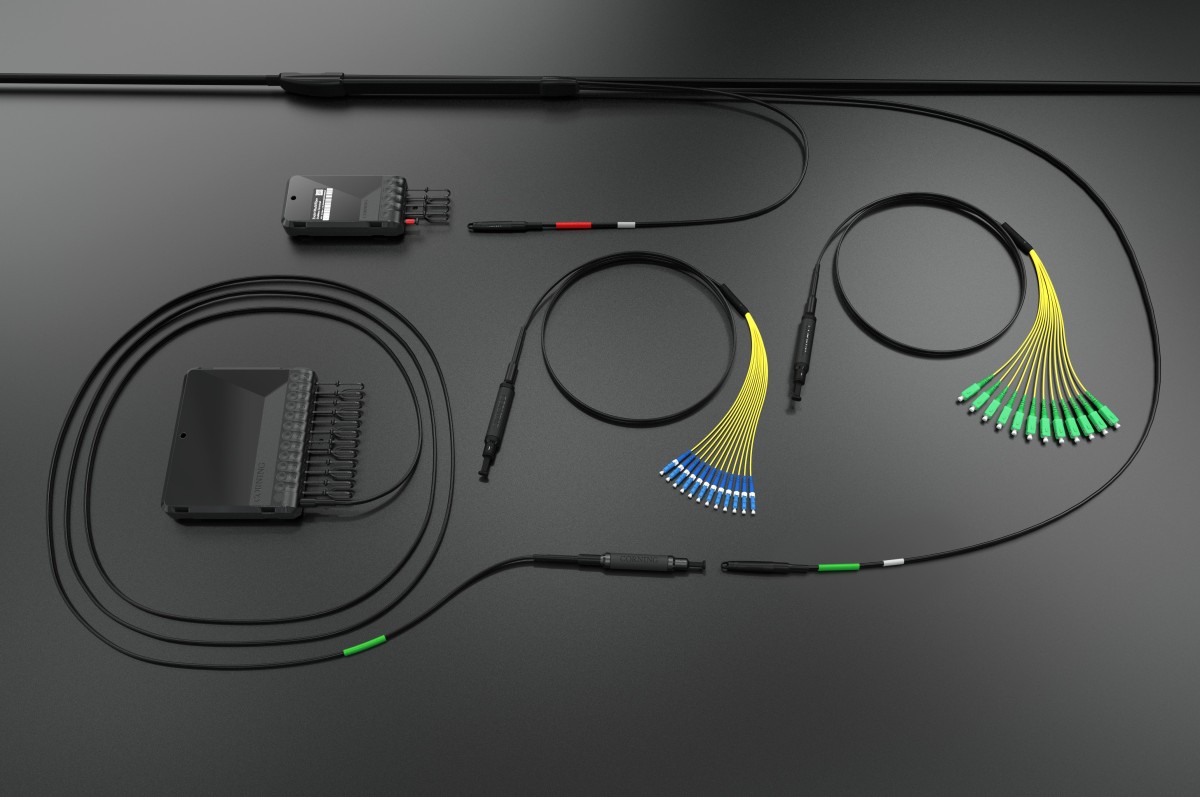
Multifiber Pushlok is a “stick-and-click” connector technology that draws on Corning’s experience helping network operators reach more than 100 million homes worldwide. The compact and fiber-dense connector allows operators to deploy more fiber in tighter spaces – an essential consideration for increasing data usage. It is a key feature in a new line of Evolv solutions, which take complicated splicing tasks out of the field to help installers connect homes and businesses more efficiently.
“We’re working alongside our customers to address new and ongoing challenges, such as cost constraints, labor shortages, and aggressive deployment timelines,” said Bob Whitman, vice president of market development, Carrier Networks, Corning Optical Communications. “Our Multifiber Pushlok technology will help network operators bring the benefits of high-speed connectivity to more lives around the world – faster and more easily.”
The technology enhances three new Corning Evolv solutions:
Evolv® Assemblies with Multifiber Pushlok™ Technology add flexibility to network architecture with a variety of size and density options. Multifiber Pushlok’s tactile and audible feedback simplifies the cable assemblies’ installation.
Evolv® Terminals with Multifiber Pushlok™ Technology include a new “stubless” version that reduces packaging material by up to 65% per assembly, allowing for up to 200% more product per shipping pallet.
Evolv® FlexNAP™ with Multifiber Pushlok™ Technology is preconnectorized to fit operators’ customer-specific locations, reducing their reliance on skilled labor and delivering cost savings of on average £18 per home, compared to traditional splice methods. The new system on RPX® cable fits into 32-millimeter ducts, surpassing legacy solutions constrained to 51-millimeter ducts. This results in up to a 50%[1] reduction in carbon footprint through minimized duct material usage. The system also features a new built-in, locatable dust cap, which allows operators to swiftly locate the system for buried deployments and simplify network-troubleshooting efforts.