Digital Newsletter
Each week our editor Phil Alsop rounds up the most popular articles, videos and expert opinions. We compile this into a Digital Newsletter and send it straight to your inbox every week.
Digital Magazines
We'll let you know each time a new edition of Digitalisation World is released so that you're always kept up-to-date with the latest and greatest news and press releases.
Video Magazines
The Digitalisation World Video magazine contains the latest Zoom interviews with experts in the industry.
For years, immersion cooling was seen as a niche — an experimental technology reserved for specialized use cases. But the data center landscape is changing rapidly. Artificial intelligence (AI), high-performance computing (HPC), and edge deployments are pushing thermal limits higher than ever. Rack densities are skyrocketing, and traditional air-based cooling is struggling to keep up.
In this new reality, immersion cooling is no longer an exotic option — it’s becoming an operational necessity.
Why the Sudden Shift?
The rise of AI workloads has transformed the performance profile of modern IT infrastructure. High-density GPU clusters and advanced processors generate intense heat loads that conventional airflow simply cannot dissipate efficiently. As a result:
Immersion cooling addresses these issues head-on by submerging IT hardware directly into a thermally conductive, non-conductive dielectric fluid. This fluid absorbs and transfers heat with far greater efficiency than air, eliminating the need for complex air handling systems.
If It’s So Good, Why Isn’t Everyone Using It?
Like any major shift in infrastructure, adoption takes time. Many organizations are working with legacy systems, and decision-makers are often influenced by outdated perceptions of immersion cooling’s complexity or cost. However, forward-thinking operators are already seeing:
Mainstream-Ready, Today
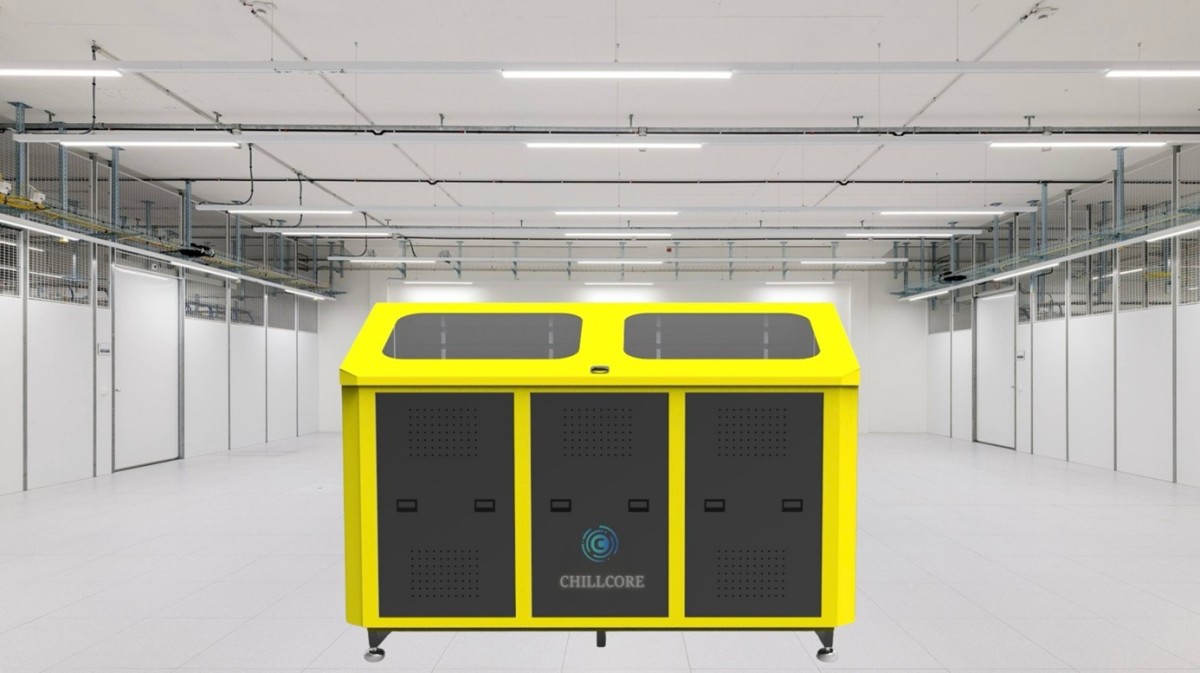
Contrary to the belief that immersion cooling is still “in the future,” companies like Chillcore have engineered modular, ready-to-deploy systems that prove otherwise. These systems are already serving telecom operators, edge data centers, and HPC facilities where traditional cooling simply isn’t viable.
Chillcore’s designs focus on:
The Takeaway
Immersion cooling has moved far beyond the experimental stage. It’s here, it works, and it’s solving real-world challenges today. The transition is happening — and those who adopt early will enjoy not just technical advantages, but also lower costs, higher sustainability, and a competitive edge.
For organizations looking to modernize their cooling strategy, the message is clear: the future is liquid, and the future is now.
For more information, visit Chillcore Liquid Cooling.