Digital Newsletter
Each week our editor Phil Alsop rounds up the most popular articles, videos and expert opinions. We compile this into a Digital Newsletter and send it straight to your inbox every week.
Digital Magazines
We'll let you know each time a new edition of Digitalisation World is released so that you're always kept up-to-date with the latest and greatest news and press releases.
Video Magazines
The Digitalisation World Video magazine contains the latest Zoom interviews with experts in the industry.
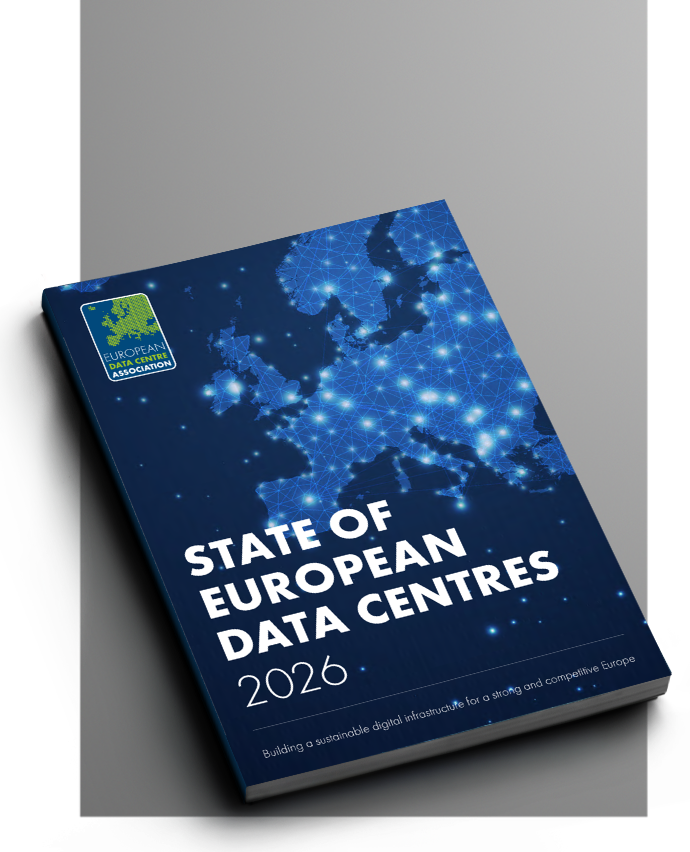
The European Data Centre Association (EUDCA) recently released its 2026 State of European Data Centres Report, highlighting changes in the region's data centre landscape. Building on last year, the current data illustrates a shift from hub-centric development towards a more distributed, energy-integrated, and AI-driven digital ecosystem.
Europe’s data centre sector is undergoing expansion and technical evolution, driven by AI hyper-development. This growth, however, faces constraints due to energy availability and access. The EUDCA report indicates growth beyond traditional hubs such as Frankfurt, London, Amsterdam, Paris, and Dublin (FLAP-D), with expansion decentralising across Southern Europe, the Nordics, Central and Eastern Europe (CEE), and selected Tier2 metropolitan areas.
Data centres, transitioning from cloud-led growth to AI demands, are now acknowledged as critical infrastructure for Europe's competitiveness and security. European IT capacity rose from 10,539 MW in 2023 to 14,784 MW in 2025, surpassing predictions. A €176bn in investment is anticipated from 2026 to 2031.
Scale colocation campuses and AI-optimised facilities are prevalent in new infrastructure developments. With a compound annual growth rate (CAGR) exceeding 25% expected through 2031, traditional retail and wholesale sites are expanding slower as customers demand AI-ready environments.
Key growth drivers include hyperscale data centres and the advent of 'neoclouds', providing ultra-high-density compute power for AI developers and emerging cloud-adjacent platforms.
Energy limitations pose an industry challenge, with two-thirds of operators listing power availability as top concern. AI clusters elevating rack densities beyond 100kW prompt the need for design and operational adaptations, including liquid cooling architectures.
The socioeconomic contribution of the data centre industry remains significant, with the sector contributing €53bn to GDP in 2025, expected to rise to €137.5bn by 2031. Directly supporting over 300,000 skilled jobs, facilities also benefit local communities through district heating support and renewable power agreements.
Amidst regulatory expectations, the industry embraces the Energy Efficiency Directive (EED), ensuring harmonised reporting and transparency. Ninety percent of energy used by European centres now comes from renewable sources.
Progress around water usage and heat reuse is notable, with examples seen across Europe. EUDCA Secretary General Michael Winterson remarked on Europe’s potential to play a significant role in AI-ready infrastructure once energy challenges are addressed.
The report emphasises the need for industry collaboration with policymakers for improved grid investment and reform, which are pivotal for evolving Europe's strategic and sustainable digital economy.